Alcohol content in champagne is a fascinating subject that not only affects the taste and experience of the drinker but also has implications for various regulatory and production aspects. As a champagne bottle supplier, I've had the privilege of witnessing firsthand how different champagne bottles can vary in their alcohol content. In this blog, I'll explore the factors that contribute to these variations and how they impact the champagne industry.
Understanding Champagne Basics
Champagne is a sparkling wine that can only be produced in the Champagne region of France, following strict regulations set by the Appellation d'Origine Contrôlée (AOC). These regulations govern everything from the grape varieties used (primarily Chardonnay, Pinot Noir, and Pinot Meunier) to the production methods, including the traditional méthode champenoise, which involves a second fermentation in the bottle.
The alcohol content in champagne is typically measured as a percentage of alcohol by volume (ABV). Most champagnes have an ABV ranging from 11% to 13%, but this can vary depending on several factors.
Grape Varieties and Alcohol Content
The choice of grape varieties plays a significant role in determining the alcohol content of champagne. Each grape variety has its own unique characteristics, including sugar levels, acidity, and flavor profiles.
Chardonnay grapes are known for their high acidity and delicate flavors. They tend to produce champagnes with a slightly lower alcohol content, usually around 11% to 12%. These champagnes are often described as elegant, refreshing, and with a citrusy or floral aroma.
Pinot Noir grapes, on the other hand, are more full - bodied and can contribute to a higher alcohol content. Champagnes made primarily from Pinot Noir can have an ABV of 12% to 13%. They are often richer, with flavors of red fruits, such as strawberries and cherries, and a more robust structure.
Pinot Meunier grapes are known for their fruity and approachable nature. They can add a touch of sweetness and a lower acidity to the champagne, and the resulting alcohol content can vary within the typical range, depending on the blend.
Many champagnes are blends of these three grape varieties, allowing winemakers to create a balanced and complex flavor profile while also controlling the alcohol content. For example, a champagne with a higher proportion of Pinot Noir may have a slightly higher alcohol content compared to one with a more significant amount of Chardonnay.
Climate and Growing Conditions
The climate and growing conditions in the Champagne region also have a profound impact on the alcohol content of champagne. The amount of sunlight, rainfall, and temperature during the growing season can affect the sugar levels in the grapes.
In warmer years, the grapes tend to ripen more fully, resulting in higher sugar levels. When these grapes are fermented, the yeast converts the sugar into alcohol, leading to a higher alcohol content in the champagne. Conversely, in cooler years, the grapes may not ripen as much, resulting in lower sugar levels and a lower alcohol content.
The soil type in the Champagne region also plays a role. The chalky soil in many parts of the region helps to regulate the water supply to the vines, which can influence the grape's development and sugar accumulation. Vines growing in well - drained chalky soil may produce grapes with more balanced sugar and acidity levels, leading to a more consistent alcohol content in the champagne.
Winemaking Techniques
Winemaking techniques can significantly affect the alcohol content of champagne. One of the key steps is the first fermentation, where the grape juice is converted into still wine. Winemakers can control the alcohol content at this stage by adjusting the fermentation temperature and the amount of yeast used.
A higher fermentation temperature can speed up the fermentation process, resulting in a more rapid conversion of sugar to alcohol. However, this can also lead to a loss of some of the delicate flavors and aromas in the wine. Lower fermentation temperatures can slow down the process, allowing for a more controlled and gentle conversion, which may result in a more balanced alcohol content and a better - preserved flavor profile.
The second fermentation, which occurs in the bottle, is another critical step. During this process, a mixture of sugar and yeast, known as the liqueur de tirage, is added to the still wine. The amount of sugar in the liqueur de tirage can be adjusted to control the amount of carbon dioxide produced and, to some extent, the final alcohol content. A higher amount of sugar will result in more carbon dioxide and a slightly higher alcohol content, as more sugar is converted to alcohol during the second fermentation.
The Role of Dosage
The dosage is the final addition of a sugar - based solution to the champagne before it is corked. This step is used to balance the acidity and adjust the sweetness level of the champagne. The amount of dosage can also have an impact on the alcohol content.
Brut champagnes, which are the most common type, have a relatively low dosage, usually less than 12 grams per liter. These champagnes are dry and have an alcohol content within the typical range. Extra - Brut champagnes have an even lower dosage, often less than 6 grams per liter, and are extremely dry.
On the other hand, Demi - Sec and Doux champagnes have a higher dosage, with Demi - Sec having between 32 and 50 grams per liter of sugar and Doux having more than 50 grams per liter. The additional sugar in these champagnes can lead to a slightly higher alcohol content, as some of the sugar may be fermented during storage.
Packaging and Alcohol Content
As a champagne bottle supplier, I understand that different types of champagne bottles can also be associated with variations in alcohol content, although the bottle itself does not directly affect the alcohol.
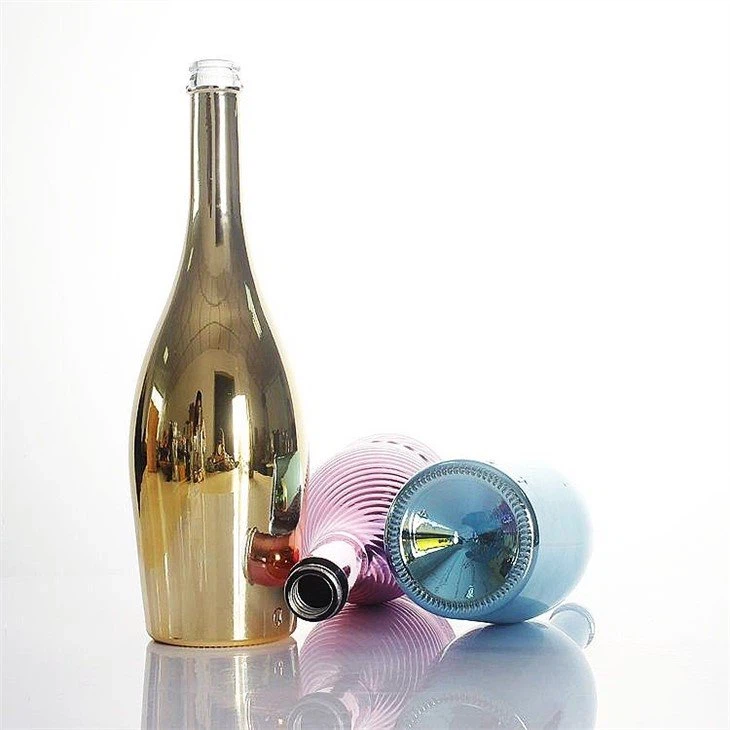
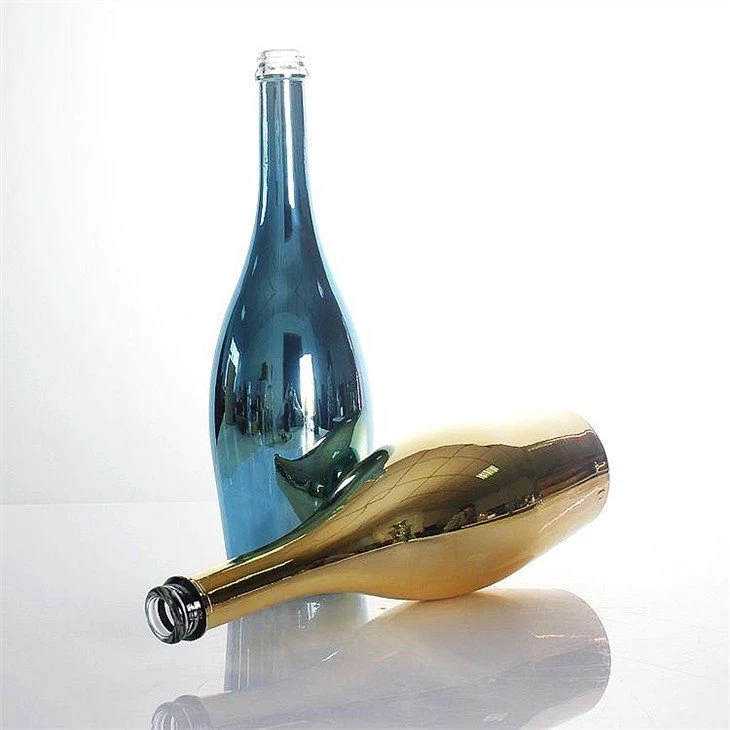
For example, Gold Champagne Bottle are often used for special editions or high - end champagnes. These champagnes may be made from a particular blend of grapes or from a specific vintage, which could result in a different alcohol content compared to standard champagnes.
Champagne Glass Bottle come in various shapes and sizes, and the champagne they contain can vary in alcohol content based on the factors mentioned above. Some glass bottles may be used for champagnes with a specific flavor profile or alcohol level, depending on the winemaker's intentions.
Personalised Champagne Bottle are often customized for special occasions. The champagne inside these bottles can have different alcohol contents, depending on the customer's preferences and the winemaker's recommendations.
Regulatory Considerations
The alcohol content of champagne is also regulated by the AOC. The regulations ensure that the champagne meets certain quality standards and that consumers are informed about the product they are purchasing.
Champagnes must have an alcohol content within a specific range, and this information must be clearly stated on the label. This allows consumers to make informed decisions based on their preferences for alcohol strength and flavor.
Implications for the Champagne Industry
The variation in alcohol content in different champagne bottles has several implications for the champagne industry. For consumers, it means that they have a wide range of options to choose from, depending on their taste preferences and the occasion. Whether they prefer a light and refreshing champagne with a lower alcohol content or a more full - bodied and robust one with a higher alcohol content, there is a champagne out there for them.
For winemakers, controlling the alcohol content is an important part of their craft. They must balance the various factors, such as grape varieties, climate, and winemaking techniques, to produce a champagne that meets their quality standards and consumer expectations.
As a champagne bottle supplier, I play a crucial role in this process. I work closely with winemakers to provide them with the right bottles for their champagnes, taking into account the unique characteristics of each product, including the alcohol content.
If you are interested in sourcing high - quality champagne bottles for your business, I would be more than happy to discuss your specific needs. Whether you are a winery looking for standard bottles or a customer in need of Personalised Champagne Bottle for a special event, I can offer a wide range of options. Contact me to start a procurement discussion and find the perfect champagne bottles for your requirements.
References
- Jackson, H. (2018). "The World of Champagne". Wine Press.
- Robinson, J. (2019). "Wine Grapes: A Complete Guide to 1,368 Vine Varieties, Including Their Origins and Flavours". Allen & Unwin.
- Turrentine, J. (2020). "Understanding Wine Fermentation". Wine Business Journal.