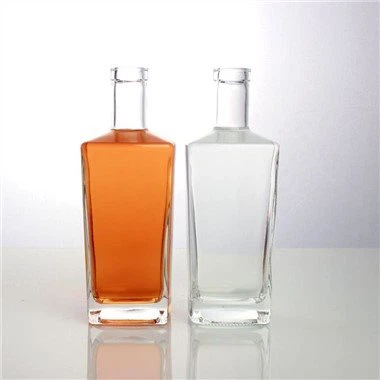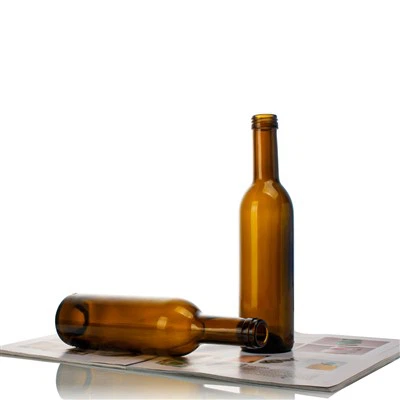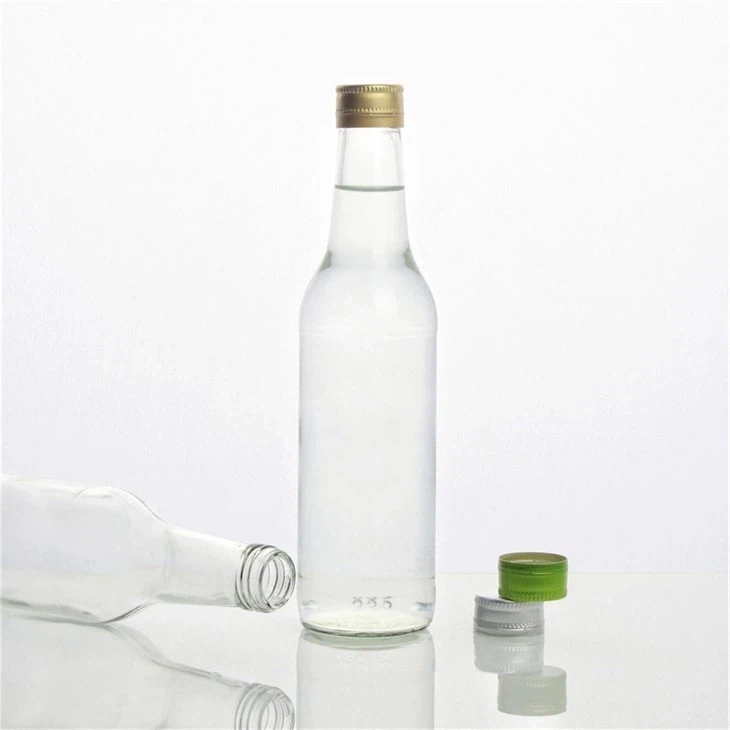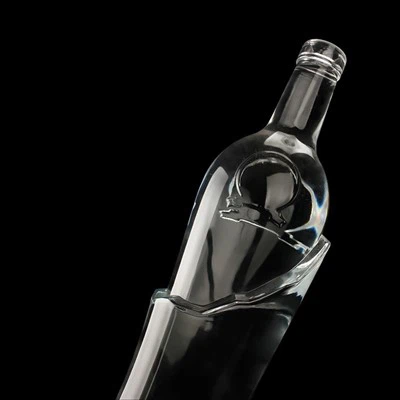
Hey there! As a vodka bottle supplier, I've seen all sorts of vodka bottles, from the classic 750ml Extra Flint Spirits Glass Bottle For Whiskey Vodka Tequila to the super cool Skull Alcohol Bottle and the sleek 750ml Olso Glass Bottle For Vodka Olive oil. One question that often comes up, whether you're a bar owner, a vodka enthusiast, or just someone who wants to keep track of their stash, is how to measure the amount of vodka left in a bottle. In this blog, I'm gonna share some practical ways to do just that.
1. The Visual Estimation Method
This is the simplest way to get a rough idea of how much vodka is left in a bottle. It doesn't require any fancy tools, just your eyes.
First, hold the bottle up to a well - lit area. Look at the level of the vodka inside the bottle. If you're using a standard 750ml bottle, most of these bottles have markings or at least a shape that you can use as a guide. For example, if the vodka reaches about halfway up the bottle, you can assume there's around 375ml left.
However, this method has its limitations. Bottles come in different shapes, like the Skull Alcohol Bottle which has an irregular shape. In such cases, visual estimation can be quite inaccurate. But for regular - shaped bottles like the 750ml Extra Flint Spirits Glass Bottle For Whiskey Vodka Tequila, it can give you a ballpark figure.
2. Using a Measuring Cup
If you want a more accurate measurement, a measuring cup is a great tool. Here's how you do it:
- First, make sure the measuring cup is clean and dry.
- Carefully pour the vodka from the bottle into the measuring cup. Do it slowly to avoid spillage.
- Read the measurement on the side of the measuring cup. Make sure your eyes are level with the surface of the vodka to get an accurate reading.
The advantage of this method is that it gives you an exact amount of vodka left in the bottle. But it has a couple of drawbacks. One, you have to open the bottle, which can expose the vodka to air and potentially affect its quality over time. Two, pouring the vodka can be a bit messy, especially if you're dealing with a large bottle.
3. The Scale Method
This method is based on the fact that vodka has a known density. The density of vodka is approximately 0.94 g/ml. Here's what you need to do:
- First, weigh the empty bottle. You can do this using a kitchen scale. Make a note of the weight.
- Then, weigh the bottle with the vodka in it.
- Subtract the weight of the empty bottle from the weight of the bottle with vodka.
- Divide the result by the density of vodka (0.94 g/ml). The answer will give you the volume of vodka in the bottle.
For example, if the weight of the bottle with vodka is 1200 grams and the weight of the empty bottle is 400 grams, the weight of the vodka is 1200 - 400 = 800 grams. Dividing 800 by 0.94 gives you approximately 851 ml.
This method is quite accurate, but it requires a scale. Also, you need to know the exact weight of the empty bottle, which can be a bit of a hassle if you don't have that information handy.


4. Using a Graduated Syringe
A graduated syringe is another option for measuring the vodka left in a bottle. It's especially useful if you only need to measure a small amount.
- Insert the syringe into the bottle through the opening.
- Slowly pull the plunger of the syringe to draw the vodka into it.
- Read the measurement on the side of the syringe.
The benefit of using a syringe is that it's precise and can be used without fully opening the bottle. However, it can be a bit tricky to use, especially if the bottle opening is small.
5. Laser - Based Measuring Devices
There are some high - tech laser - based measuring devices available in the market. These devices work by emitting a laser beam into the bottle and measuring the distance to the surface of the vodka. Based on this measurement, they can calculate the volume of vodka left in the bottle.
These devices are very accurate and can work with bottles of different shapes. But they are quite expensive, so they might not be a practical option for everyone, especially for home use.
Why Measuring the Amount of Vodka Left in a Bottle Matters
As a vodka bottle supplier, I understand why it's important to measure the amount of vodka left in a bottle. For bar owners, it helps with inventory management. Knowing how much vodka is left in each bottle allows them to order new stock at the right time, avoiding running out of popular brands.
For vodka producers, accurate measurement is crucial for quality control. They need to ensure that each bottle contains the right amount of vodka before it's shipped out.
And for consumers, it can help with budgeting. If you know how much vodka you have left, you can plan your purchases better and avoid over - spending.
Conclusion
There are several ways to measure the amount of vodka left in a bottle, each with its own pros and cons. Whether you choose the simple visual estimation method or go for a more high - tech solution, the key is to find a method that works best for you.
If you're in the market for high - quality vodka bottles, we've got a wide range of options, including the 750ml Extra Flint Spirits Glass Bottle For Whiskey Vodka Tequila, Skull Alcohol Bottle, and 750ml Olso Glass Bottle For Vodka Olive oil. If you're interested in learning more about our products or have any questions regarding vodka bottles, feel free to reach out for a procurement discussion.
References
- "The Physics of Liquids" - A general physics textbook that explains the concept of density.
- Various vodka manufacturers' websites for information on bottle shapes and standard volumes.