

As a beverage bottle supplier, one question I often encounter from our partners and customers is whether beverage bottles made of mixed materials can be recycled. This is a crucial topic not only for environmental sustainability but also for the long - term viability of our industry. Let's delve into this complex issue.
The Prevalence of Mixed - Material Beverage Bottles
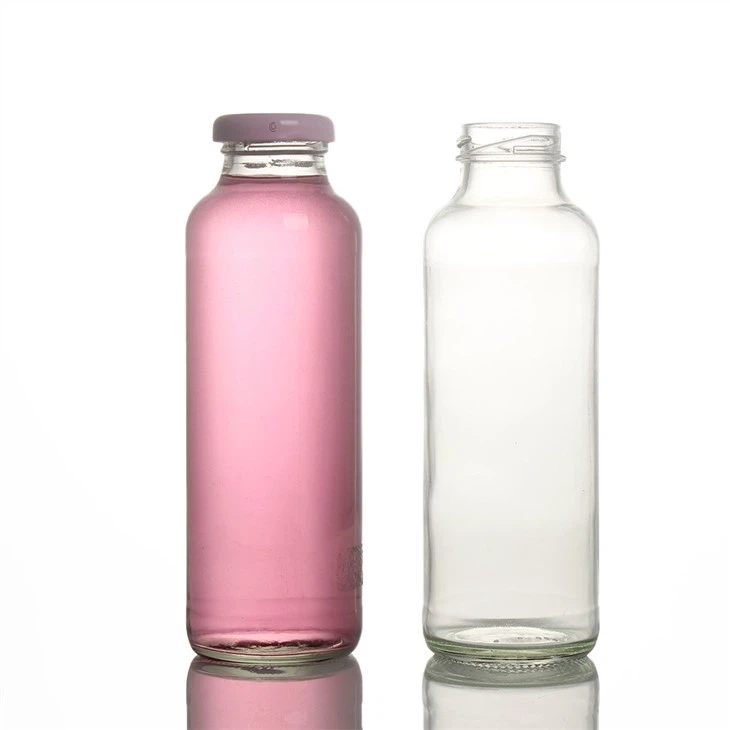
In today's market, mixed - material beverage bottles have become increasingly common. These bottles are designed to combine the best properties of different materials. For example, a bottle might have a plastic outer layer for durability and a thin layer of aluminum or another barrier material to preserve the freshness and flavor of the beverage inside. Our company offers a wide range of beverage bottles to meet diverse customer needs, such as the 12oz 355ml Juice Glass Bottle and the 750ml Beverage Bottle With Swing Cap. However, we also see the trend towards more innovative mixed - material designs in the market.
Recycling Challenges of Mixed - Material Bottles
The recycling of beverage bottles made of mixed materials faces several significant challenges. One of the main issues is the separation of different materials. Recycling facilities are typically set up to handle single - material waste, such as pure plastic or glass. When it comes to mixed - material bottles, separating the components requires specialized equipment and processes. For instance, a bottle with a plastic body and a metal cap needs a separation mechanism that can accurately distinguish and isolate these two materials. Otherwise, the mixed waste can contaminate the recycling stream, reducing the quality of recycled materials and even causing damage to recycling machinery.
Moreover, the compatibility of different materials in a mixed - bottle can be a problem. Some materials may melt at different temperatures or have different chemical properties, making it difficult to recycle them together. For example, if a bottle combines polycarbonate plastic with a flexible plastic liner, during the recycling process, the two materials may not blend properly or may react in an unfavorable way, resulting in a sub - standard recycled product.
Current Recycling Solutions for Mixed - Material Bottles
Despite these challenges, there are some emerging solutions in the field of recycling mixed - material beverage bottles. One approach is the development of new separation technologies. Advanced sensors and sorting equipment are being designed to identify and separate different materials in mixed - waste streams more accurately. These technologies can use differences in density, electrical conductivity, and optical properties to distinguish between materials.
Another solution is chemical recycling. This process involves breaking down the polymers in the mixed - material bottles into their basic chemical components. These components can then be used to synthesize new polymers, effectively recycling the plastic part of the bottle. Chemical recycling has the potential to handle more complex mixed - material combinations and can produce high - quality recycled materials.
Our Company's Stance on Mixed - Material Bottle Recycling
As a responsible beverage bottle supplier, we are committed to promoting sustainable practices. We work closely with recycling facilities and research institutions to explore and support the development of better recycling solutions for mixed - material bottles. We also strive to educate our customers about the importance of proper recycling and the challenges associated with mixed - material products.
When customers choose our products like the 750ml Water Glass Bottle, we encourage them to participate in local recycling programs. We believe that by working together, we can make a positive impact on the environment and ensure the long - term availability of resources.

The Future Outlook
The future of recycling mixed - material beverage bottles looks promising but also requires continuous effort. As technology advances, we can expect more efficient separation and recycling processes to be developed. Governments and regulatory bodies also play a crucial role. By implementing policies that encourage the use of recyclable materials and support the development of recycling infrastructure, we can accelerate the transition to a more circular economy.
In addition, consumer awareness is key. When consumers understand the importance of recycling mixed - material bottles and are willing to take the extra steps to ensure proper disposal, it can significantly improve the recycling rate. Our company will continue to play an active role in this process, by providing high - quality beverage bottles and promoting sustainable practices throughout the industry.
Conclusion
In conclusion, while beverage bottles made of mixed materials present significant challenges for recycling, it is not an insurmountable task. With the right technologies, policies, and consumer behavior, we can make recycling these bottles a reality. As a beverage bottle supplier, we are dedicated to being part of the solution. If you are interested in purchasing high - quality beverage bottles or want to discuss more about sustainable packaging solutions, we welcome you to contact us for procurement and further discussions.
References
- "The Handbook of Recycling: Waste Management, Processing and Markets", By Timothy E. Graedel, Bruno C. Rechberger
- "Recycling: Economics, Policy and Social Aspects", By Roberto A. Bertolucci, Pietro Coppola
